
In the pulp moulded tableware industry, trimming is a crucial process that ensures products have smooth edges, consistent dimensions, and meet food packaging standards. However, many manufacturers face the common issue of uneven trimming. This leads to rough or irregular edges, higher rejection rates, additional rework, and ultimately reduced customer satisfaction.
This article explores the root causes of uneven trimming, provides practical solutions for traditional trimming systems, and introduces an advanced trim-free technology that eliminates the problem entirely.
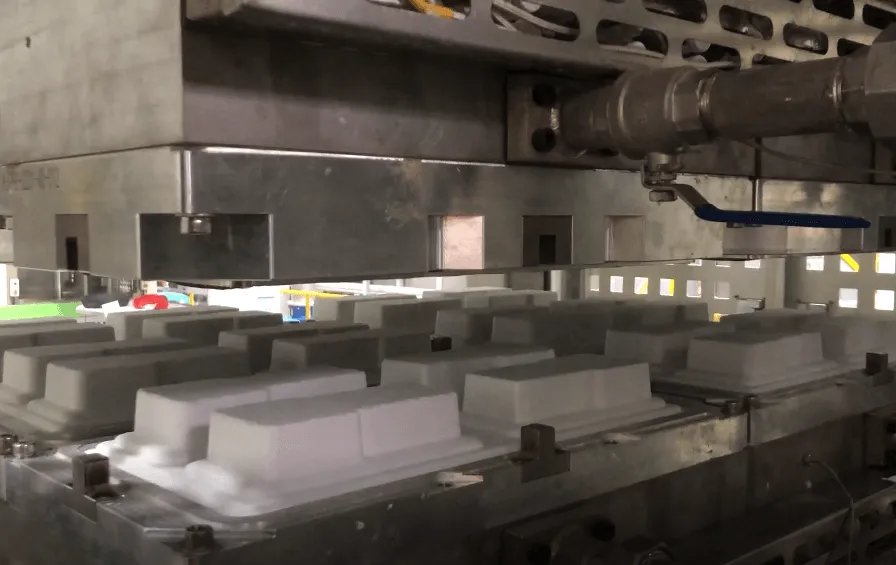
1. Common Causes of Uneven Trimming
- Mould Precision Issues
- Worn or unbalanced cutting edges on the mould.
- Improper clearance between moulds and cutting knives.
- Incorrect Pressure and Temperature Settings
- Low cutting pressure causes incomplete trimming and burrs.
- Inadequate mould heating makes fibres too tough to cut cleanly.
- Forming Inconsistencies
- Uneven pulp concentration or vacuum suction during forming creates variable thickness at the product’s edge.
- Excessive moisture in the product’s rim leads to tearing during trimming.
- Knife and Equipment Problems
- Dull or contaminated blades increase friction, producing rough edges.
- Poor alignment between cutting tools results in uneven cuts.
- Operational and Maintenance Factors
- Lack of regular calibration reduces cutting accuracy.
- Operators are unfamiliar with fine-tuning parameters.
2. Practical Solutions with Traditional Trimming
- Optimizing Moulds and Knives
- Inspect and sharpen knives regularly, replace when worn.
- Maintain proper mould clearance to ensure uniform force.
- Use high-hardness, wear-resistant materials (e.g., tungsten carbide).
- Adjusting Pressure and Temperature
- Match trimming pressure to product thickness for one-pass cutting.
- Increase mould heating temperature to make fibres brittle and easier to cut.
- Improving the Forming Process
- Balance pulp concentration to prevent thickness variations.
- Control vacuum suction and compression pressure for even product walls.
- Extend drying time or raise drying temperature to lower moisture content before trimming.
- Enhancing Equipment Precision
- Calibrate machines regularly to maintain accuracy.
- Introduce semi-automatic or fully automatic trimming units for consistent quality.
- Apply inline inspection systems to detect trimming defects early.
- Strengthening Operation and Maintenance
- Implement a preventive maintenance schedule to keep moulds and knives clean.
- Train operators to properly adjust parameters and troubleshoot trimming issues.
- Standardize trimming procedures to reduce variability.
3. Advanced Solution: Trim-Free Pulp Moulding Technology
While the above measures can improve trimming quality, they do not fully eliminate the problem. A breakthrough solution is the adoption of trim-free pulp moulding machines, also known as Forming & Finishing in One Step technology.
How It Works
Instead of forming a rough blank and then trimming, this system uses precision hot-press moulds that shape the tableware into its final form—including smooth edges—during the forming process itself.
Key Advantages
- ✅ Perfect Edge Finish: No secondary trimming required, edges are smooth and consistent.
- ✅ Higher Efficiency: Eliminates trimming as a separate process, saving time and labor.
- ✅ Lower Rejection Rate: Reduces defects caused by cutting errors.
- ✅ Energy & Cost Savings: Fewer process steps, less energy consumption, and reduced tool wear.
- ✅ Premium Product Quality: Suitable for high-end tableware markets such as coffee cup lids, clamshells, and fast-food containers.
This trim-free technology is becoming the future trend in pulp moulded packaging, particularly for companies targeting export or premium markets.
4. Conclusion
There are two main paths to solving uneven trimming in pulp moulded tableware production:
- Short-Term Improvement: Optimize knives, moulds, process parameters, and maintenance to improve trimming quality.
- Long-Term Upgrade: Invest in trim-free pulp moulding equipment, which eliminates trimming issues entirely, reduces costs, and delivers premium-quality products.
For manufacturers aiming to scale up production and compete in high-value markets, adopting trim-free technology is not only a solution but also a strategic upgrade for the future.


