
A high-capacity tableware forming line is not a single-product machine. The same line that presses a dinner plate in the morning can run hinged clamshell boxes in the afternoon — the product is decided by the mold, not by the machine. For a manufacturer moving away from plastic, that flexibility is what turns one investment into a full catalogue of compostable foodservice packaging.
One line, many products: how it works
Molded fibre products all share the same production logic. Pulp is formed onto a mold under vacuum, hot-pressed between heated dies to drive out moisture and set the shape, then trimmed to a clean edge. Because that sequence does not change from one product to the next, the range a line can make depends almost entirely on the molds fitted to it.
This is what allows a foodservice packaging producer to cover a wide catalogue without a wide floor of machines. A single high-capacity line becomes a flexible platform: swap the mold set, adjust the pressing time, and the same equipment moves from shallow plates to deep hinged boxes. The sections below walk through the main product families such a line is built to produce.
Flatware: plates, bowls and trays
Flat and shallow items are the foundation of most tableware catalogues, and they are where molded pulp performs most naturally.
Plates
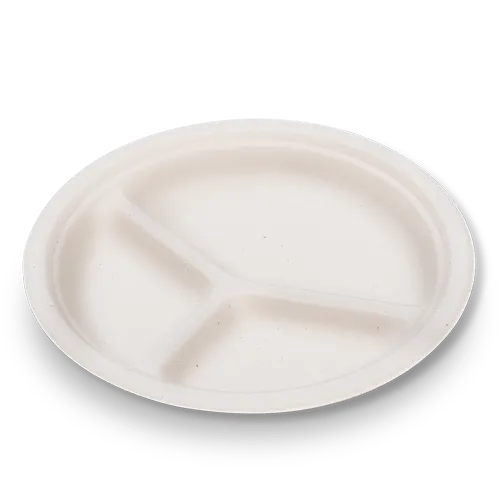
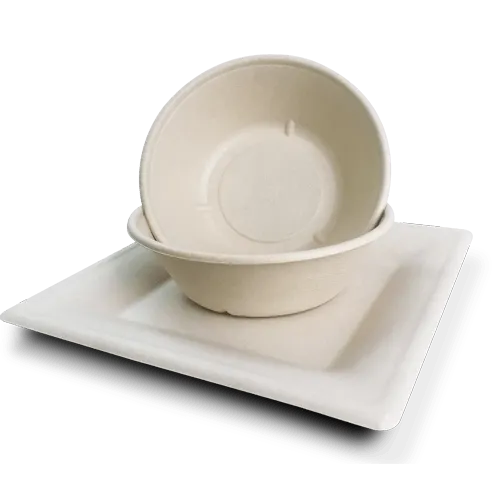
Round, square and oval plates in a range of diameters and depths — from small dessert plates to full dinner plates and sectioned party plates. A smooth pressed surface and rigid rim let them carry hot, wet and oily meals without going soft, which is the main requirement any caterer will test first.
Bowls
Deeper geometry for soups, salads, noodles, rice and snacks. Bowls demand a cleanly formed wall and a stable base so they hold liquid and stack without deforming — both are set during hot pressing, which is why a heated-die line handles them well.
Trays
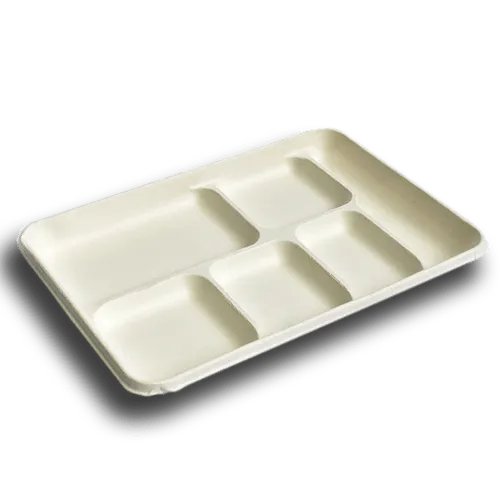
Flat serving and packing trays used across catering, canteens and retail. The same tooling approach extends to produce trays for fruit and vegetables and protective trays for other goods, giving a producer a route into packaging beyond the table.
Containers: clamshells, lunch boxes and food boxes
Three-dimensional, closed containers are where takeaway and delivery demand concentrates. These are more complex to form than flatware because they involve deeper walls, hinges and lids — exactly the kind of geometry a high-capacity hot-press line is designed to hold to spec.
Clamshell containers
Hinged one-piece boxes that open and close in a single moulded part, widely used for burgers, sandwiches, salads and full meals. The integrated hinge and closing lip have to be formed accurately every cycle, or the box will not seal — consistency across a long run is the real test here.
Lunch boxes
Single or multi-compartment meal boxes, with or without matching lids, for canteens, meal-prep brands and delivery kitchens. Compartments keep dishes separated, which is a frequent requirement for set meals and airline or institutional catering.
General food containers
Bowls with lids, deli boxes and portion containers for soups, sides and packaged fresh food. Together with clamshells and lunch boxes, they let a producer offer retailers and restaurants a complete plastic-free takeaway range from one line.
Why containers matter commercially
Takeaway and delivery packaging is the fastest-moving segment under plastic-reduction rules. A line that can add clamshells and lunch boxes to a plate-and-bowl catalogue gives a manufacturer direct access to that demand without buying separate equipment for each format.
Specialty items: cup lids and compartment trays
Beyond the core range, the same line can produce higher-value specialty items that often command better margins because fewer suppliers make them well in fibre.
Cup lids
Molded fibre lids for hot and cold drink cups, replacing the plastic lids that plastic-reduction rules increasingly target. Lids are small but demanding: the fit onto the cup rim must be tight and repeatable, so dimensional accuracy during pressing and trimming is critical.
Compartment trays
Multi-section trays that separate a meal into distinct portions — used in canteens, schools, hospitals, airlines and ready-meal packing. Their divided geometry is formed in a single pressing operation, so a well-tooled line produces them at the same rate as a plain tray.
Bagasse and molded pulp: the material behind the range
Everything described above is molded pulp — foodservice items formed from a fibre slurry rather than cut or injection-moulded. The fibre most commonly chosen for tableware is bagasse, the fibrous residue left after sugarcane is crushed for juice.
Bagasse suits this whole product family for practical reasons. As an agricultural by-product it is inexpensive and widely available in sugar-growing regions. Its fibres produce items that resist heat, oil and water, with enough rigidity for plates, bowls and closed containers alike. And because it is fully biodegradable and compostable, it answers directly to the regulations pushing single-use plastic out of foodservice. Wood pulp is often blended in where extra strength or a finer finish is needed, but bagasse remains the workhorse fibre for compostable tableware.
| Product family | Typical items | Main end users |
|---|---|---|
| Flatware | Plates, bowls, trays | Catering, canteens, retail, events |
| Containers | Clamshells, lunch boxes, food boxes with lids | Takeaway, delivery, meal-prep brands |
| Specialty | Cup lids, compartment trays | Cafés, schools, hospitals, airlines |
The equipment that ties the range together
The breadth of this catalogue only holds together if the equipment can move between products reliably. A high-capacity wet-press line — vacuum forming followed by double hot-pressing and robotic in-line trimming — is what delivers the smooth, rigid, spec-accurate items that let a producer serve plates and clamshells from the same floor.
HGHY builds this type of line for exactly that purpose. Its molded pulp tableware machine converts bagasse and recovered fibre into plates, bowls, lids, clamshells and trays, with forming and hot-pressing integrated on one platform and mold changes handled as a routine setup rather than a rebuild. A representative configuration gathered from HGHY’s product information is shown below.
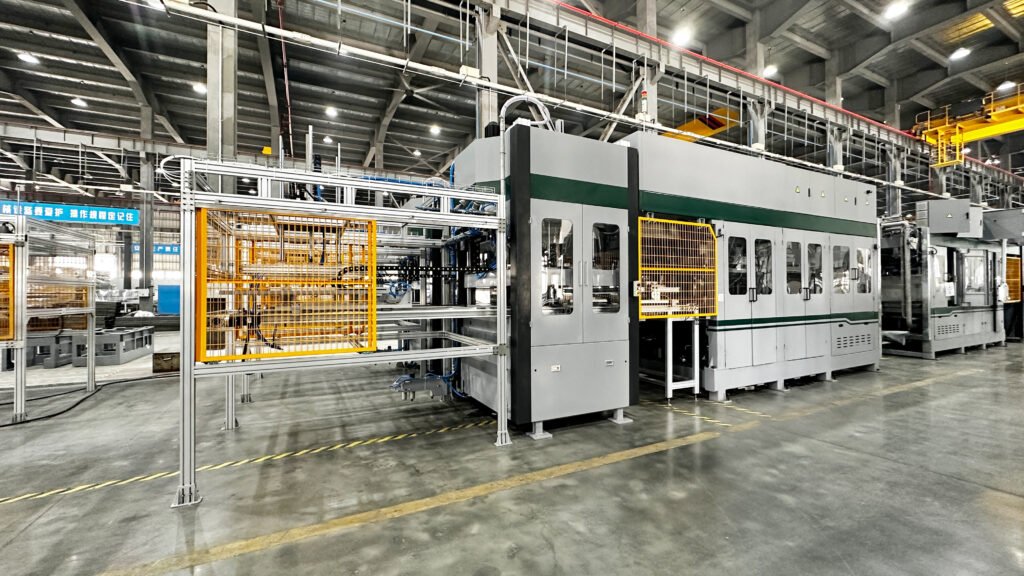
| พารามิเตอร์ | ข้อกำหนด |
|---|---|
| แบบอย่าง | ZC2Q—110110 |
| Daily capacity | 1000 กก. (±10%) |
| Platform size | 980 × 940 มม. |
| Forming / pressing | การแลกเปลี่ยน |
| Max product height | 80 มม. / 1.2 มม. |
| Heating energy | Electricity / thermal oil |
| Raw material | Bagasse, recovered fibre |
Several of these features map directly onto the product range: the 80 mm forming height covers everything from flat plates to deep lunch boxes; double hot-pressing gives the oil and water resistance that closed food containers need; and robotic trimming holds the edge accuracy that cup lids and clamshell seals depend on. The result is one line that credibly produces the full catalogue rather than a narrow slice of it.
 English
  Thai
Thai  Russian
  Vietnamese