
Protective packaging has quietly become one of the most interesting corners of the molded fiber business. For years, molded pulp meant egg trays and cheap industrial cushioning. That has changed. Brands in skincare, consumer electronics and fragrance are now actively looking for a plastic-free way to protect fragile, high-value products — and a shockproof paper tray manufacturer machine is what makes that switch possible at scale.
The equipment itself is not new technology, but the markets it now serves are. Understanding what the machine does, what it can produce, and where the margin lies is what separates a commodity tray operation from a supplier that wins premium packaging contracts.
What a shockproof paper tray actually is
A shockproof paper tray is a three-dimensional molded fiber insert shaped to hold a specific product in place and absorb impact during handling and transport. Unlike flat sheets or loose fill, the tray is molded to the exact geometry of the item it protects, so the product cannot shift, rattle or take a direct hit. The ribbed, cellular structure deforms progressively under shock and spreads the energy of a drop instead of passing it straight to the object.
The result is a cushioning performance close to expanded polystyrene, but with a material that is recycled, recyclable and compostable. For a brand under pressure to remove plastic foam from its supply chain, that combination is exactly what the market has been waiting for.
What the machine does
The molded pulp protective inserts machine — also known as the shockproof paper tray manufacturer machine — converts waste paper, old newspaper and virgin fiber into finished protective trays through a controlled sequence of steps. The workflow runs from raw material and pulping, through screening, cleaning and deflaking, to forming, drying and automatic stacking.
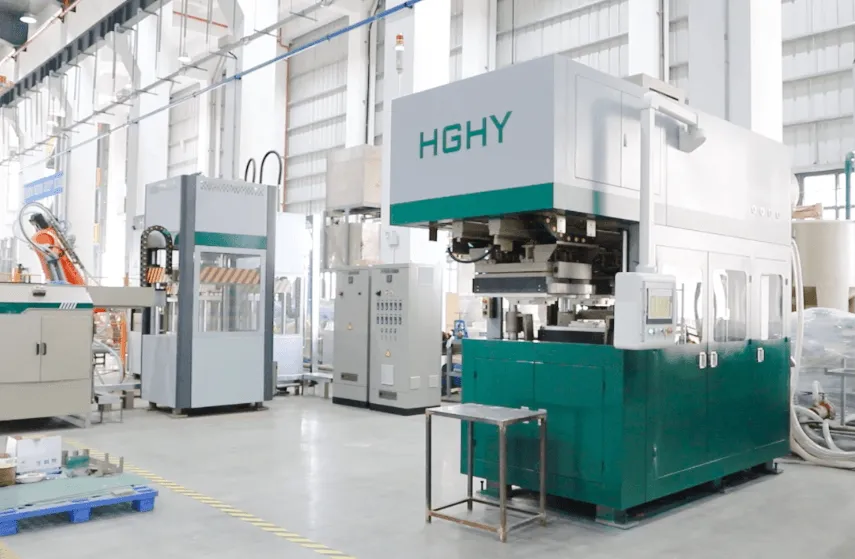
Three sub-systems do the heavy lifting:
- Pulp preparation. Bagasse, bamboo or wood pulp is mixed with water and, where needed, functional additives to produce a uniform slurry. Fiber choice here drives the strength, surface finish and cost of the finished tray.
- Forming. The slurry is drawn onto a forming mold by vacuum suction, which pulls water through the perforated tool and lays the fibers into the three-dimensional shockproof shape. A transfer mold then moves the wet part to the drying line.
- Drying. Hot air is applied evenly across the molded parts to remove residual moisture and give the tray its final mechanical strength, after which parts are transferred to the stacking system and shrink-wrapped.
The line is run through a PLC and touchscreen control system, which keeps the process stable, lifts throughput and cuts the labor needed per shift.
Technical specifications
The configuration is built around a reciprocating production line, with the drying and heating options selected to match the product and the local energy supply.
| Tham số | Thông số kỹ thuật |
|---|---|
| Người mẫu | Reciprocating production line |
| Machine structure | 1 forming upper platen + 1 forming lower platen |
| Platen size | Customized on demand |
| Forming method | Chuyển động tịnh tiến |
| Matching dryer | Natural drying / drying tunnel / single-layer dryer (optional) |
| Heating type | Thermal oil, natural gas or steam |
| Control | PLC + touchscreen |
| Designed capacity | Depends on product |
| Product height range | ≤ 150 mm |
| Raw materials | Bagasse, bamboo, wood pulp, recovered paper |
Two points matter for anyone evaluating the line. First, the platen and molds are customized, so a single machine can be re-tooled to produce completely different tray shapes as the order book changes. Second, the 150 mm height range is generous enough to cradle tall, awkward items — perfume bottles, serum droppers, handset boxes — not just flat components.
Where the business opportunity is
The general packaging market is crowded and price-driven. The growth — and the margin — sits in premium sectors where protection, presentation and sustainability all matter at once. Three stand out.
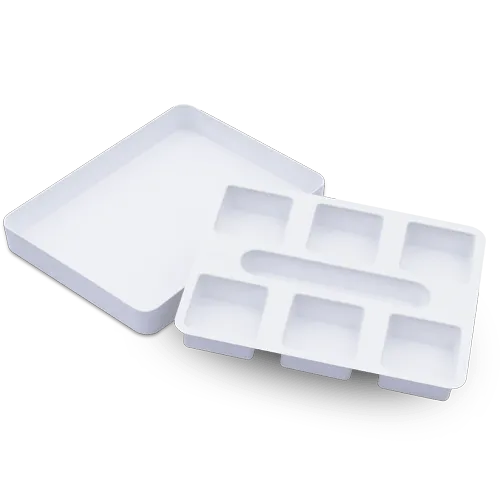
Skincare and cosmetics packaging
Skincare brands ship glass jars, pump bottles and glass droppers that break easily and photograph badly when scuffed. A molded fiber insert holds each piece firmly, protects it through e-commerce shipping, and gives the unboxing a clean, natural, premium texture that fits the “clean beauty” positioning most of these brands are chasing. Because cosmetics lines change packaging frequently, the ability to swap molds quickly is a direct commercial advantage for the tray supplier.
3C and consumer electronics packaging
Electronics manufacturers have been under the most pressure to remove polystyrene from their boxes, driven by their own corporate sustainability targets. Molded pulp inserts already replace foam in packaging for phones, earbuds, cameras, chargers and small appliances. The tight dimensional control of a molded tray keeps sensitive devices immobilized, while the recycled-fiber story supports the brand’s environmental claims. This is one of the fastest-moving substitution markets in protective packaging today.
Perfume and fragrance packaging
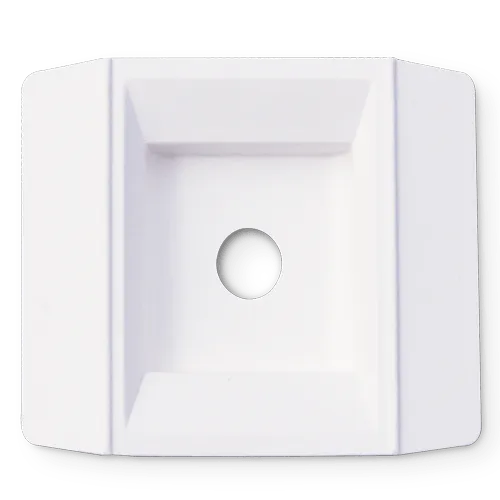
Fragrance is where protection and luxury presentation meet most sharply. Perfume bottles are heavy, valuable and fragile, and the outer packaging is part of the product experience. A precisely molded fiber tray immobilizes the bottle, absorbs shock in transit, and delivers a matte, tactile, sustainable presentation that increasingly replaces plastic vacuum-formed inserts in premium gift boxes.

Beyond these three, the same line produces bottle trays, cup trays, shoe trays, apple trays and general electronic packaging — so the equipment is rarely tied to a single customer segment.
What to weigh before investing
A shockproof paper tray operation lives or dies on a few practical points. Fiber selection sets both cost and quality. Mold flexibility determines how many different customers one line can serve. Drying is the largest energy cost in molded fiber production, so the choice between thermal oil, natural gas and steam heating should follow whatever fuel is cheapest locally.
Supplier track record matters too. HGHY has helped more than 300 clients across over 60 countries set up production, which gives a useful base of reference installations. As practical planning figures, the equipment ships in roughly 130 days after the order and deposit, commissioning generally runs 60–90 days depending on the scope of equipment, and projects have typically paid back within two to three years.
The bottom line
The shockproof paper tray manufacturer machine has moved well beyond commodity cushioning. With customizable molds, a 150 mm forming range and flexible heating, one line can serve skincare, electronics and fragrance customers at the same time — the three sectors where brands are paying a premium to replace plastic foam with molded fiber. For a manufacturer weighing where to expand, that overlap of protection, presentation and sustainability is exactly where the next wave of packaging demand is heading.
 English
  Thai
Thai  Russian
  Vietnamese