
Untreated molded pulp packaging is not waterproof. Because it is made primarily from cellulose fibers, it can absorb liquid water and moisture from humid air. As moisture uptake rises, molded pulp can lose stiffness, soften, swell, deform, and lose stacking strength. That does not make molded pulp unsuitable for cold-chain or high-humidity use—but it does mean the package must be engineered and tested for its actual exposure. In many cold-chain, condensation, wet-product, or direct-splash applications, a moisture-resistant treatment or barrier coating is needed.
The key question is not simply, “Is molded pulp waterproof?” It is: What moisture exposure will the package experience, for how long, at what temperature, and what must the package still do afterward? A tray that only needs to survive humid warehouse air requires a different solution from a food-service pack exposed to condensation, meltwater, or direct contact with wet products.
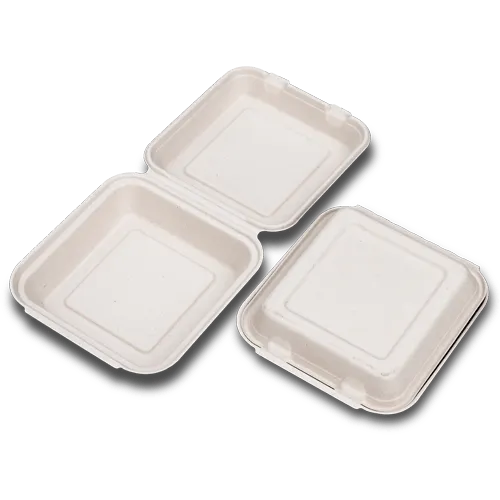
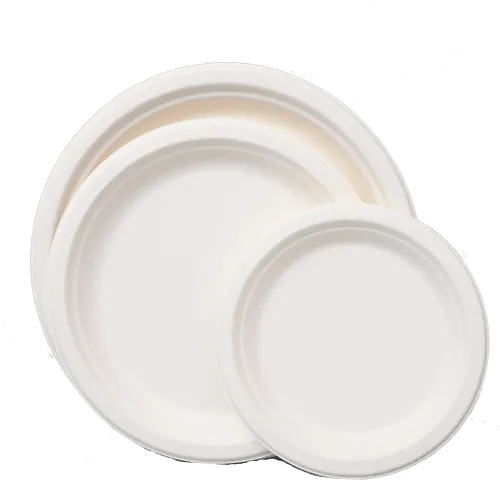
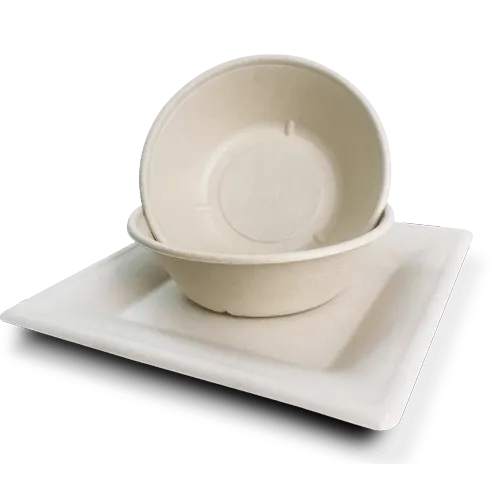
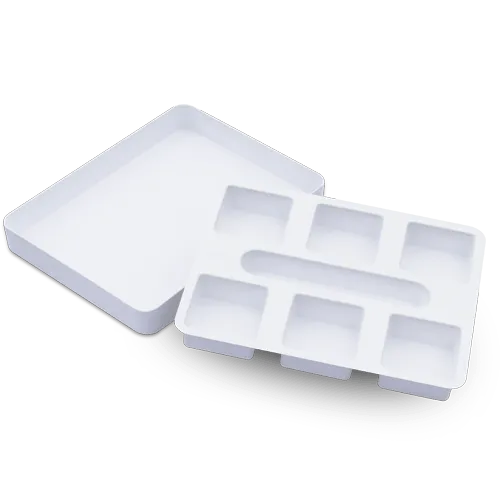
Why moisture changes molded pulp performance
Molded pulp is a fiber network. Its fibers are commonly derived from recovered paper, virgin pulp, or other cellulosic feedstocks. Cellulose is hydrophilic, meaning it attracts and retains water molecules. When the fiber network takes up moisture, the material’s behavior changes.
The practical effects can include:
- reduced compression and stacking strength;
- lower rigidity and a softer feel;
- dimensional change, warping, or loss of fit;
- roughened surfaces or fiber lift;
- weaker performance after repeated humid-to-dry cycles;
- slower or less reliable protection during handling and transport.
Academic reviews of molded pulp identify water resistance and strength as important performance challenges. They also note that molded pulp has good cushioning properties when dry, while end-use properties can be adjusted through processing and chemical treatment. In other words, moisture behavior is not an afterthought—it is a core part of package design.
Is molded pulp naturally water-resistant or waterproof?
Untreated molded pulp: moisture-tolerant for limited exposure, not waterproof
A dry molded-pulp tray can tolerate ordinary handling and short, incidental contact with humidity better than a loose sheet of paper. Its three-dimensional fiber structure, thickness, density, and drying process provide some practical resistance to brief exposure.
But untreated molded pulp is still absorbent. Direct water contact, persistent condensation, wet surfaces, or repeated high-humidity cycles can allow water to enter pores and fiber interfaces. As the structure absorbs moisture, it may soften and lose shape.
Calling an untreated pulp package “waterproof” is therefore inaccurate unless it has been tested to a clearly defined waterproof-performance requirement.
Moisture-resistant molded pulp: engineered to slow water uptake
Moisture-resistant molded pulp is designed to delay or reduce water absorption. The result may come from a denser molded structure, improved fiber formulation, process control, internal additives, surface treatment, or a coating system.
This type of package can be appropriate when exposure is limited or intermittent—for example, humid storage, chilled distribution with controlled condensation, or short-term contact with a slightly damp surface. Its actual suitability must be proven through application-specific testing.
Waterproof or high-barrier molded pulp: a system, not a label
A package that must withstand liquid contact or severe condensation generally needs a specifically engineered barrier solution. Depending on the product and disposal requirements, that may include a coating, laminated layer, or other barrier treatment.
“Waterproof” should be used only when the finished package has passed an agreed test that reflects the real use case. It is not enough for a coating to bead water during a short demonstration; the package must still retain the required shape, strength, and function after the intended exposure.
How cold-chain conditions create a special moisture challenge
Cold-chain packaging does not only face low temperature. It often faces condensation—the formation of water droplets when a cold package meets warmer, humid air. This is one of the main reasons molded pulp can perform differently in refrigerated logistics than in a dry ambient warehouse.
Common cold-chain moisture sources include:
| Moisture source | What happens | Potential impact on molded pulp |
|---|---|---|
| High relative humidity | The fiber network absorbs moisture from the air over time. | Softening, reduced stiffness, lower stacking strength. |
| Condensation | Water droplets form on cold surfaces during loading, unloading, or temperature changes. | Localized wetting, staining, deformation, and weaker contact points. |
| Wet product surfaces | Fresh produce, chilled food, or ice-packed goods carry surface moisture. | Direct absorption and faster loss of structural integrity. |
| Meltwater or leaks | Water accumulates in a carton, tote, or transport container. | Severe softening or failure if the pulp component is not barrier-protected. |
| Humidity cycling | The package moves between refrigerated and warmer areas. | Repeated expansion, contraction, and changes in fit or stackability. |
A cold-chain application should therefore be designed around the worst realistic exposure, not around the average temperature alone. A molded-pulp insert may remain functional in a refrigerator yet fail after repeated unloading, condensation, and reloading cycles.
When does molded pulp soften or deform?
Softening or deformation becomes more likely when several factors occur together:
- Long exposure time. A short humidity spike is different from hours or days in a wet environment.
- Direct liquid contact. Splashing, pooling, ice melt, and wet products are more demanding than humid air.
- High load while wet. A damp tray under compression can lose stacking performance more quickly.
- Low density or open structure. More porous products generally allow moisture to enter more readily.
- Poor drainage or poor airflow. If water remains trapped, local damage can spread.
- Repeated temperature changes. Condensation cycles can be more damaging than a steady cool, dry condition.
The visible symptom may be a softened surface, but the commercial risk is usually more serious: trays no longer stack evenly, inserts no longer hold their position, or product protection becomes inconsistent during transport.
Decide whether a water-resistant coating is needed
A coating is not automatically required for every molded-pulp application. Adding a barrier changes cost, manufacturing complexity, material recovery options, and sometimes surface appearance or printability. The correct decision should be based on exposure and performance requirements.
| Application condition | Is a barrier treatment usually worth evaluating? | Why |
|---|---|---|
| Dry indoor transport and storage | Usually not the first requirement | Standard molded pulp may be adequate if it stays dry. |
| Humid warehouse or seasonal humidity | Often worth evaluating | Humidity can reduce stiffness and stackability over time. |
| Chilled logistics with limited condensation | Usually yes | The package may need controlled moisture uptake and retained strength. |
| Fresh, damp, or chilled products | Yes | Direct moisture contact creates higher absorption risk. |
| Ice-packed goods, meltwater, or leakage risk | Yes, with stringent validation | The barrier must protect the product through realistic liquid exposure. |
| Direct food contact | Yes, but with an additional compliance review | The barrier and all processing aids must be suitable for the intended food-contact market. |
A practical rule is simple: if a failure caused by moisture would compromise product protection, hygiene, stacking, or customer presentation, test a barrier solution rather than relying on standard pulp alone.

Choose the right moisture-control strategy
Increase density and improve forming control
A denser, more uniform fiber structure can reduce the pathways through which water enters the package. Forming, pressing, drying, and fiber selection all affect pore structure and surface quality.
This approach may improve basic moisture tolerance, but it does not automatically make the package waterproof. It is most useful as a foundation for performance rather than a replacement for a barrier in severe wet conditions.
Use internal sizing or functional additives
Some formulations use additives during pulp preparation to improve water resistance. Their effectiveness depends on fiber type, process conditions, distribution through the pulp, drying, and the intended end use.
Any additive program should be reviewed for recyclability, compostability claims, food-contact suitability where relevant, and consistency at production scale.
Apply a surface barrier or coating
A surface coating can create a more direct barrier against moisture and, depending on the chemistry, against grease or other contaminants. Published reviews of molded pulp describe coatings and chemical treatments as approaches used to tailor end-use properties, including water and grease resistance.
However, the coating selection needs to match the exposure:
- Is the package exposed to humid air only, or to liquid water?
- Is the moisture on one side or both sides?
- Must the package survive one cold-chain cycle or many?
- Does it contact food directly?
- Must it remain recyclable, compostable, or repulpable in a defined waste stream?
A barrier that performs well against brief splashing may not be adequate for immersion, meltwater, or repeated condensation cycles.
Improve the pack system, not only the pulp component
Moisture control often requires changes beyond the molded-pulp part. Use outer cartons, liners, drainage design, ventilation, moisture separation, loading orientation, and cold-room operating procedures to reduce exposure.
For example, a molded-pulp insert may perform well when separated from pooled water and protected by the outer pack, but fail if it sits directly against melting ice. The packaging system should manage where water goes and how long it remains in contact with fiber surfaces.
Validate moisture performance with relevant tests
A generic “water-resistant” statement is not enough for cold-chain or high-humidity packaging. Validation should combine material testing with pack-level trials.
Measure water uptake
The Cobb method, covered by ISO 535, determines water absorptiveness of paper and board under specified conditions. It can be useful for comparing formulations or coating options. Lower water uptake may indicate better resistance under the chosen test conditions, but it does not by itself prove cold-chain suitability.
Condition samples at defined humidity and temperature
Test packages after exposure to the relative humidity and temperature likely to occur in storage and transport. Measure changes in mass, dimensions, stiffness, compression behavior, and fit with the packed product.
Test condensation and direct-water exposure
For refrigerated logistics, simulate the temperature transition that creates condensation. For wet-product or meltwater conditions, define a direct-contact or splash test. Record not only whether the surface gets wet, but whether the package still performs its protection and stacking functions.
Test under load
Moisture can matter most when the package is carrying weight. Evaluate stacking strength, compression, tray nesting, and deformation after conditioning or wet exposure. A package that looks acceptable when empty may fail when loaded.
Run a real distribution trial
The final proof is a controlled shipment or pilot run using the intended product, pallet pattern, outer packaging, storage conditions, and handling sequence. Inspect the molded pulp at dispatch, receipt, and after any return or temperature-cycle stage.
Write clear specifications for a coated molded-pulp package
Instead of asking for “waterproof molded pulp,” define the performance needed. A useful purchase or development specification can include:
- intended product and contact conditions;
- temperature range and relative-humidity exposure;
- expected condensation, splash, or liquid-contact scenario;
- exposure duration and number of cycles;
- required finished-package strength and dimensional limits;
- accepted water-uptake test method and target;
- stack-load requirement after conditioning;
- coating location, coverage, and visual requirements;
- food-contact, recyclability, or compostability requirements where applicable;
- inspection plan and acceptance criteria.
This turns a vague material request into a measurable engineering brief.
FAQ
Is molded pulp packaging waterproof?
Untreated molded pulp is not waterproof. It can absorb moisture and liquid water, which may reduce stiffness, strength, and dimensional stability. Waterproof performance requires a defined barrier design and validation against the intended use condition.
Does molded pulp soften in a cold chain?
It can. Cold-chain environments often combine humidity, condensation, wet surfaces, and temperature cycling. These conditions can increase moisture uptake and make molded pulp softer or less resistant to compression if the package has not been designed for that exposure.
Does all cold-chain molded pulp need a coating?
Not necessarily. The need depends on the real exposure, the duration, the load carried, and the consequences of failure. Limited humidity may be manageable with a suitable molded structure, while condensation, wet products, meltwater, or direct liquid contact usually justify evaluating a barrier treatment.
Will a water-resistant coating make molded pulp fully waterproof?
Not automatically. Coating chemistry, coverage, adhesion, edge protection, cracks, use temperature, and exposure duration all affect performance. The finished package should be tested under the actual expected moisture conditions.
How should moisture resistance be measured?
Use a combination of water-uptake testing, humidity conditioning, condensation or direct-water testing, and compression or stacking tests after exposure. ISO 535 Cobb testing can help compare water absorptiveness, but pack-level cold-chain trials are still needed for real-world validation.
Can a moisture barrier affect recyclability or compostability?
Yes. A barrier can change how the package performs in recycling, repulping, or composting systems. Define end-of-life requirements early and ask for supporting evidence for the complete finished structure—not only for the base pulp.
 English
 Thai
 Russian
 Vietnamese