
Choosing the right eco-friendly pulp forming equipment is not just about buying a machine — it’s about matching the equipment to your product goals, raw materials, production scale, labor costs, and future market demand. A good production line should help reduce energy consumption, improve product quality, minimize waste, and support long-term sustainable manufacturing.
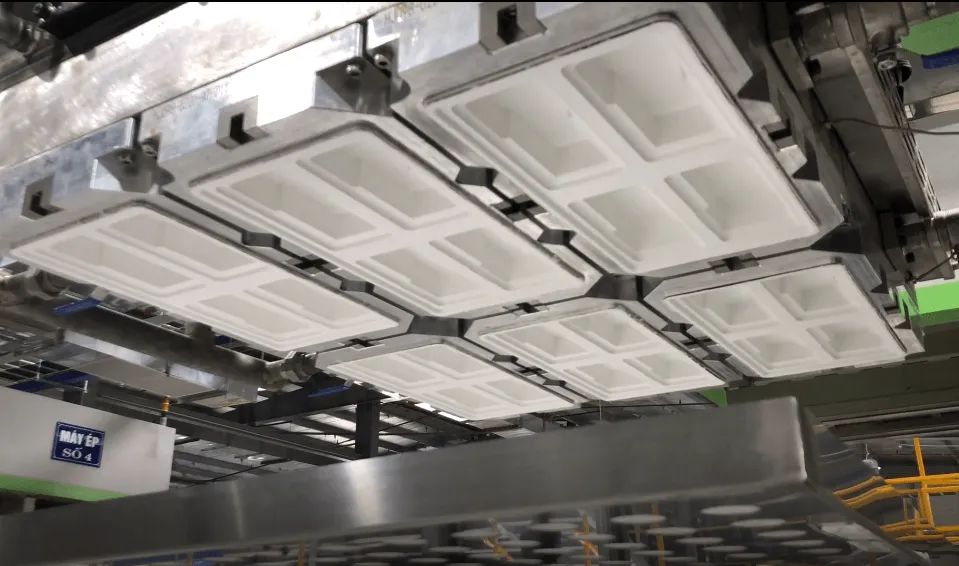
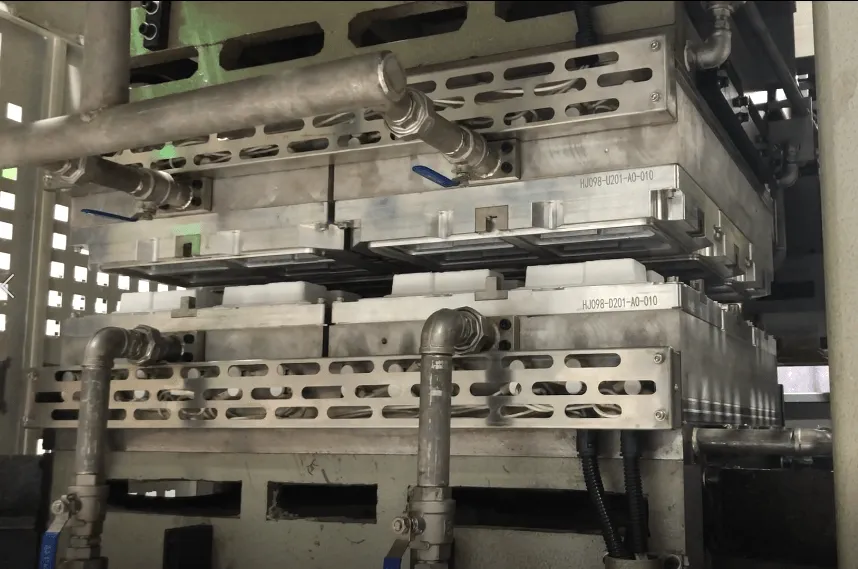
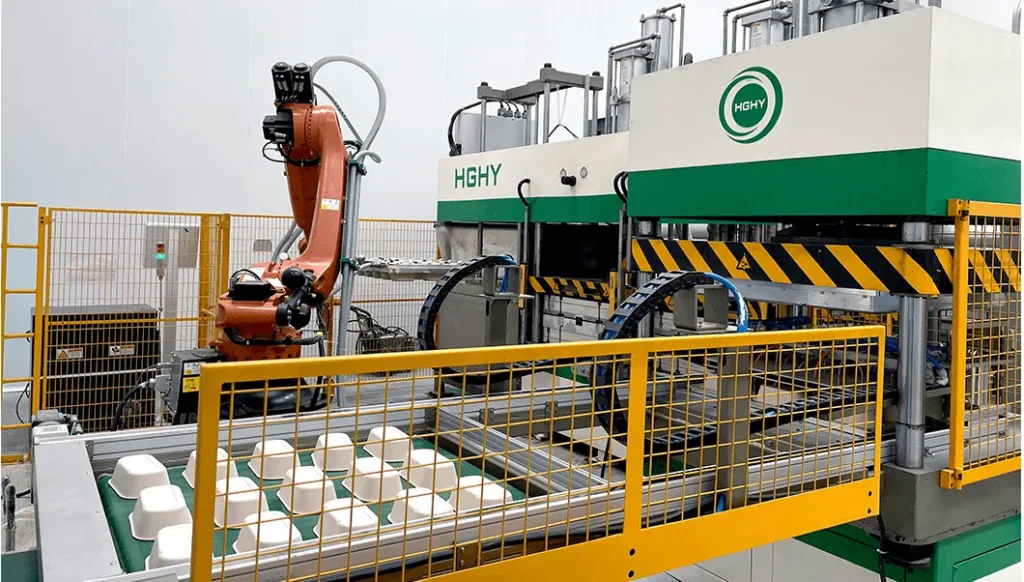

Here are the key factors that matter most when selecting eco-friendly pulp forming equipment:
1. Define Your Product Type First
Different pulp molding products require very different machine configurations.
Common categories include:
- Egg trays and egg cartons
- Fruit trays
- Industrial protective packaging
- Disposable tableware
- Premium thermoformed packaging
- Cup carriers and beverage trays
For example, high-end thermoformed packaging requires smoother surfaces, higher precision, and hot-press systems, while egg tray production focuses more on output capacity and low operating cost.
If your business plans to expand later, choose equipment that supports mold replacement and multiple product types.
2. Consider Raw Material Compatibility
An eco-friendly machine should support sustainable fiber materials such as:
- Waste paper
- Recycled cardboard
- Sugarcane bagasse
- Bamboo fiber
- Wheat straw
- Wood pulp
Different machines handle fibers differently. Some systems are optimized for recycled paper, while others are designed for finer natural fibers used in biodegradable tableware.
If you plan to produce food-grade products, verify:
- Fiber cleanliness requirements
- Food-contact compliance
- Pulp refining capability
- Water recycling system quality
3. Match Production Capacity to Market Demand
One of the biggest mistakes is buying equipment that is either too small or unnecessarily oversized.
Typical production scales include:
| Production Scale | Recommended Equipment Type |
|---|---|
| Small startup | Semi-automatic reciprocating machine |
| Medium factory | Automatic rotary machine |
| Large industrial production | Fully automatic multi-layer drying line |
| Premium packaging | Thermoforming + hot press system |
Fully automatic systems reduce labor dependency and improve consistency, especially in countries with rising labor costs.
When estimating capacity, calculate:
- Daily production target
- Number of working shifts
- Drying time
- Mold cycle speed
- Future expansion plans
4. Evaluate Energy Efficiency
Eco-friendly production is not only about biodegradable products — the manufacturing process itself should also reduce environmental impact.
Pay attention to:
- Drying system energy consumption
- Heat recovery technology
- Water recycling rate
- Vacuum system efficiency
- Servo motor usage
- Natural gas vs electric heating options
Modern thermoforming systems often use integrated hot pressing and drying to reduce energy waste and improve product appearance.
A low-cost machine with poor energy efficiency may become expensive over time.
5. Automation Level Matters
Automation directly affects:
- Labor cost
- Product consistency
- Production stability
- Defect rate
Equipment options usually include:
- Manual
- Semi-automatic
- Fully automatic
Fully automatic lines are ideal for export-oriented factories because they:
- Reduce labor dependence
- Improve hygiene
- Increase output stability
- Lower operating errors
Many modern systems also support:
- Automatic stacking
- Automatic trimming
- Robotic transfer
- Online quality inspection
6. Check Mold Precision and Flexibility
The mold determines product quality.
High-quality molds improve:
- Product smoothness
- Edge consistency
- Thickness uniformity
- Product strength
- Lid fitting accuracy
For premium packaging and tableware, thermoforming systems can achieve smoother surfaces and tighter tolerances.
Also ask:
- How quickly can molds be changed?
- Can one machine support multiple molds?
- Is custom mold design available?
7. Understand the Drying System
Drying is one of the most important and energy-intensive stages.
Common drying methods:
- Natural sun drying
- Brick drying line
- Metal drying line
- Multi-layer automatic dryer
Natural drying is cheaper but weather-dependent.
Automatic metal drying lines offer:
- Faster drying
- Stable moisture control
- Higher efficiency
- Better product consistency
For export-quality products, automatic drying is usually recommended.
8. Assess Environmental Performance
A truly eco-friendly production line should include:
- Closed-loop water recycling
- Wastewater treatment
- Low emissions
- Low noise
- Minimal raw material waste
Many advanced molded fiber systems recycle process water internally, greatly reducing water consumption.
This is especially important in regions with:
- Strict environmental regulations
- High water costs
- Sustainability certification requirements
9. Evaluate Supplier Strength
The machine supplier is just as important as the machine itself.
Check whether the manufacturer provides:
- Installation support
- Training
- Spare parts supply
- Remote troubleshooting
- Mold development
- Technical upgrades
- After-sales service
Experienced suppliers usually help optimize:
- Factory layout
- Production efficiency
- Product design
- Energy consumption
Reddit discussions from industry buyers frequently mention that reliable after-sales support and spare part availability are critical for long-term operation.
10. Think Long-Term, Not Just Initial Price
The cheapest machine is rarely the most economical choice.
Focus on:
- Machine lifespan
- Stability
- Maintenance cost
- Energy efficiency
- Product quality
- Expansion capability
A stable, efficient system may cost more initially but can significantly reduce:
- Labor expenses
- Downtime
- Product defects
- Energy consumption
Final Recommendation
Before purchasing eco-friendly pulp forming equipment, clearly define:
- What products will be produced?
- What raw materials are available locally?
- What production capacity is needed?
- What level of automation fits your budget?
- What environmental standards must be met?
- Can the supplier support future expansion?
The best equipment is not necessarily the largest or most expensive — it is the system that matches your production goals, sustainability strategy, and long-term business growth.
 English
  Thai
Thai  Russian
  Vietnamese