
As global awareness of plastic pollution continues to grow, industries are actively searching for sustainable packaging alternatives. One of the most promising solutions is containers made from sugar cane bagasse, a natural fiber residue left after extracting juice from sugarcane. Instead of being burned or discarded, this agricultural by-product can be transformed into strong, biodegradable food containers.
To achieve large-scale production, manufacturers rely on a machine to manufacture containers from sugar cane bagasse. These advanced systems convert plant fiber pulp into durable plates, trays, lunch boxes, bowls, and takeaway containers through high-temperature molding technology.
With increasing demand for eco-friendly food packaging in restaurants, supermarkets, and delivery services, bagasse container manufacturing machines are becoming a profitable investment opportunity worldwide.
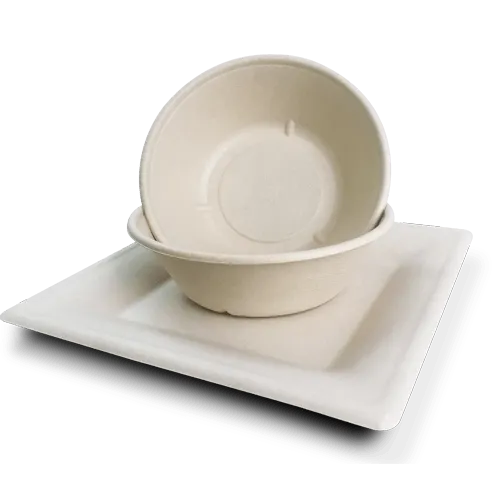
What Is Sugar Cane Bagasse?
Sugar cane bagasse is the fibrous material that remains after sugarcane stalks are crushed to extract juice. Traditionally, bagasse has been used as fuel in sugar mills, but today it has gained significant value as a renewable raw material for biodegradable packaging.
Key characteristics of bagasse include:
- Natural plant fiber
- Fully biodegradable and compostable
- Heat resistant and oil resistant
- Strong and durable after molding
- Safe for food contact
Because of these properties, bagasse has become one of the most popular materials for eco-friendly disposable food containers.
What Is a Machine to Manufacture Containers from Sugar Cane Bagasse?
A bagasse container manufacturing machine is an automated industrial system designed to convert plant fiber pulp into molded packaging products using heat, pressure, and precision molds.
These machines are widely used to produce:
- Clamshell food boxes
- Lunch containers
- Plates and bowls
- Meal trays
- Takeaway packaging
- Supermarket food trays
The equipment typically integrates pulp molding and thermoforming technology, allowing manufacturers to produce high-quality containers with smooth surfaces and precise shapes.
Main Components of a Bagasse Container Production Machine
A modern bagasse container production line usually consists of several key systems:
1. Pulp Preparation System
This section processes raw materials such as bagasse pulp, bamboo pulp, or wood pulp. Waste paper can also be added to reduce costs. The fibers are mixed with water and additives to form a uniform pulp slurry.
2. Forming System
The forming machine uses molds to shape the pulp into wet container forms. Vacuum suction draws pulp fibers onto the mold surface, creating the basic product structure.
3. Hot Press Thermoforming System
The wet molded products are transferred to heated molds where high temperature and pressure remove moisture and solidify the product. This process ensures strength, durability, and smooth surfaces.
4. Trimming System
After thermoforming, the containers are trimmed to remove excess edges, ensuring uniform size and a clean appearance.
5. Stacking and Packaging System
Finished containers are automatically stacked and prepared for packaging, improving production efficiency and reducing labor requirements.
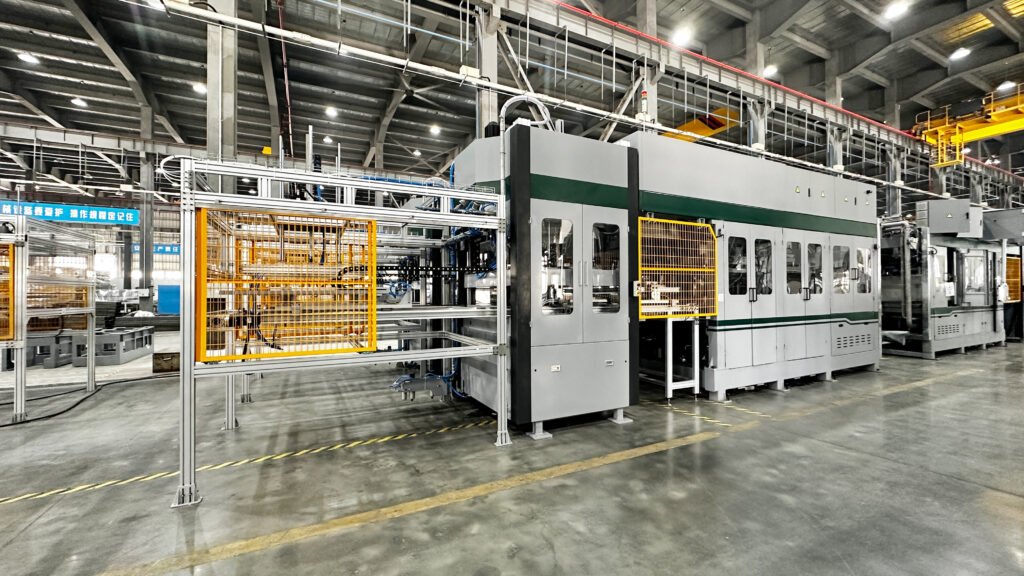
Production Process of Sugar Cane Bagasse Containers
The manufacturing process of bagasse containers is relatively straightforward but highly automated.
Step 1: Raw Material Preparation
Bagasse fibers or other plant fibers are mixed with water to create pulp.
Step 2: Pulp Molding
The pulp is vacuum-formed onto molds to create the basic shape of the container.
Step 3: Thermoforming and Drying
High temperature molds press and dry the product, making it strong and durable.
Step 4: Edge Cutting
Automatic cutting machines trim the edges to achieve precise dimensions.
Step 5: Quality Inspection and Packaging
Finished containers are inspected, stacked, and packaged for shipping.
Advantages of Using a Bagasse Container Manufacturing Machine
Environmentally Friendly
Products made from bagasse are biodegradable and compostable, helping reduce plastic waste.
Sustainable Raw Materials
Bagasse is a renewable agricultural by-product that does not require cutting trees.
Strong Market Demand
Eco-friendly packaging regulations in many countries are accelerating demand for molded pulp containers.
Food Safety
Bagasse containers are microwave-safe, freezer-safe, and oil-resistant, making them ideal for food packaging.
High Production Efficiency
Modern automated machines can produce thousands of containers per hour with minimal labor.
Choosing the Right Bagasse Container Machine
When selecting a machine to manufacture containers from sugar cane bagasse, several factors should be considered:
- Production capacity
- Automation level
- Energy consumption
- Mold design flexibility
- Product precision and surface quality
- After-sales technical support
Advanced manufacturers also offer fully automatic pulp thermoforming production lines capable of producing high-end packaging with integrated molding, drying, and cutting systems.
Conclusion
The machine to manufacture containers from sugar cane bagasse represents a powerful solution for sustainable packaging production. By converting agricultural waste into biodegradable food containers, these machines support both environmental protection and profitable manufacturing.
With global demand for eco-friendly packaging continuing to grow, investing in bagasse container production technology offers manufacturers a strong opportunity to enter the rapidly expanding green packaging market.
Companies that adopt advanced pulp molding equipment today will be well positioned to supply the next generation of sustainable food packaging solutions.
 English
  Thai
Thai  Russian
  Vietnamese