
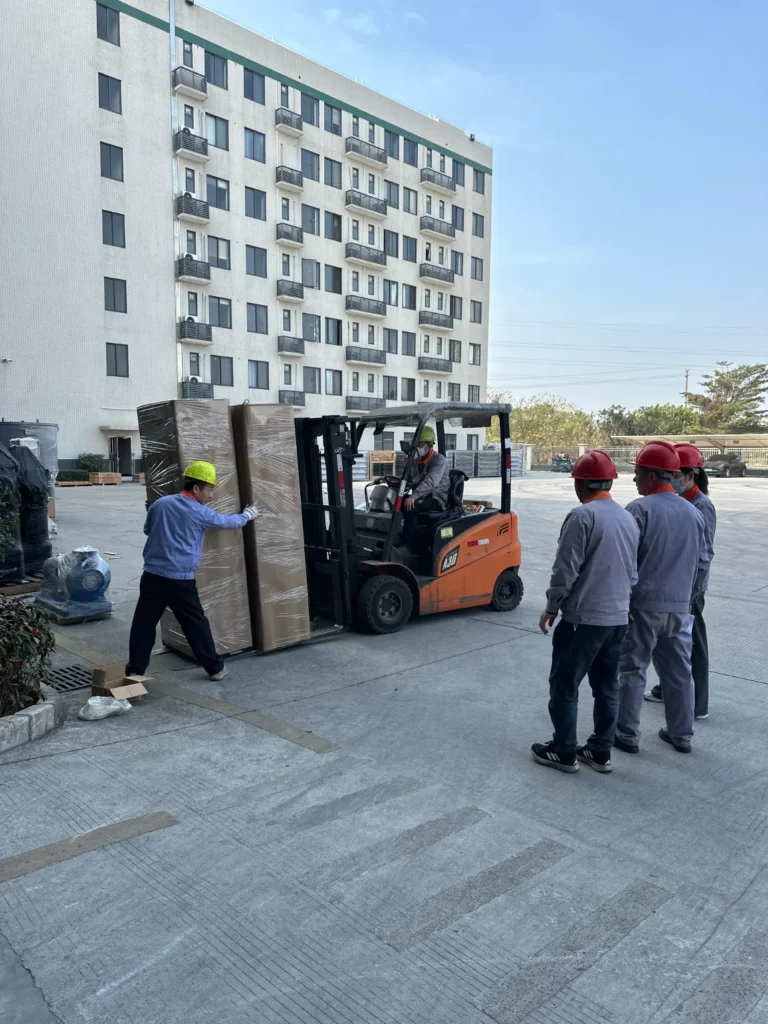
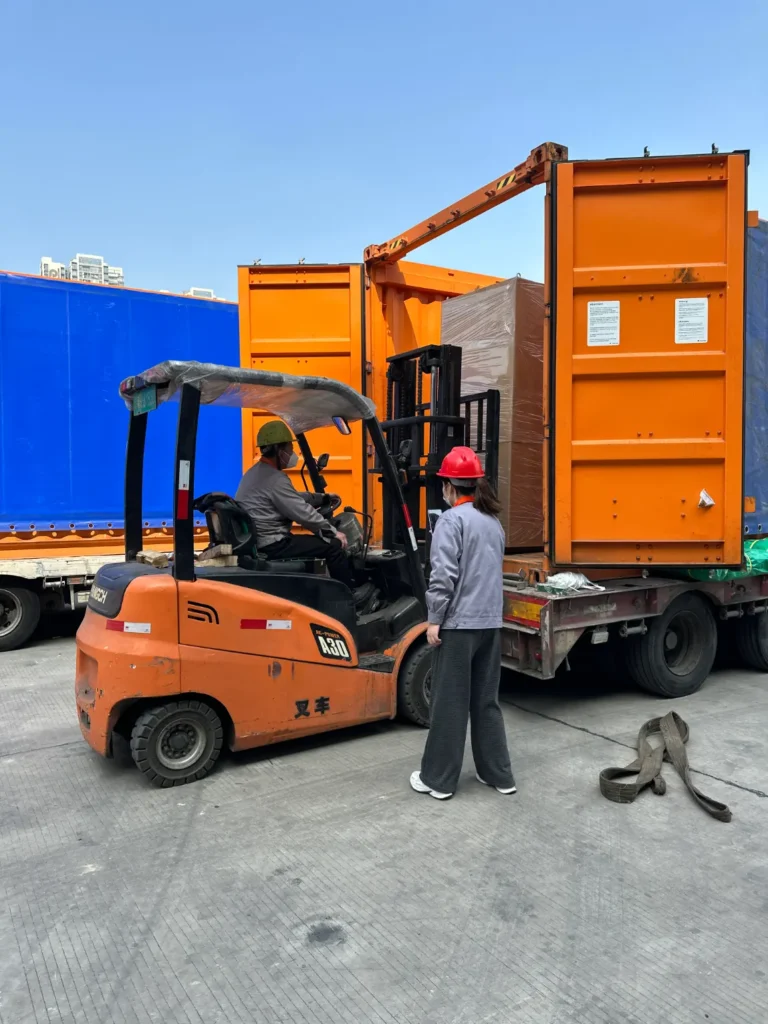
A Vietnamese client has received pulp tableware manufacturing equipment from HGHY, marking an important step toward the planned production of molded-fiber food-service products. With the equipment delivered to site, the project can move into the next critical phase: coordinated installation, utility connection, commissioning, and operator preparation.
For a pulp tableware project, delivery is more than a logistics milestone. The value of the equipment is realized when the full production system—from fiber preparation through forming, hot pressing, trimming, and finished-product handling—operates as one stable process. HGHY will support the project through the transition from delivered equipment to a production-ready line.
Equipment Arrival Creates the Foundation for the Next Phase
Receiving the equipment allows the Vietnamese client to begin practical site-readiness work. Before installation starts, the project team should confirm that the factory layout, foundation works, utilities, material flow, and safety arrangements align with the approved equipment plan.
A well-prepared site helps reduce commissioning delays and makes it easier to establish stable production conditions from the beginning. Key preparations include:
- allocating clear space for equipment placement, material handling, maintenance, and finished-product storage;
- confirming the planned routes for electrical power, water, compressed air, steam or thermal energy, drainage, and ventilation;
- preparing the raw-material and pulp-preparation areas to support orderly material flow;
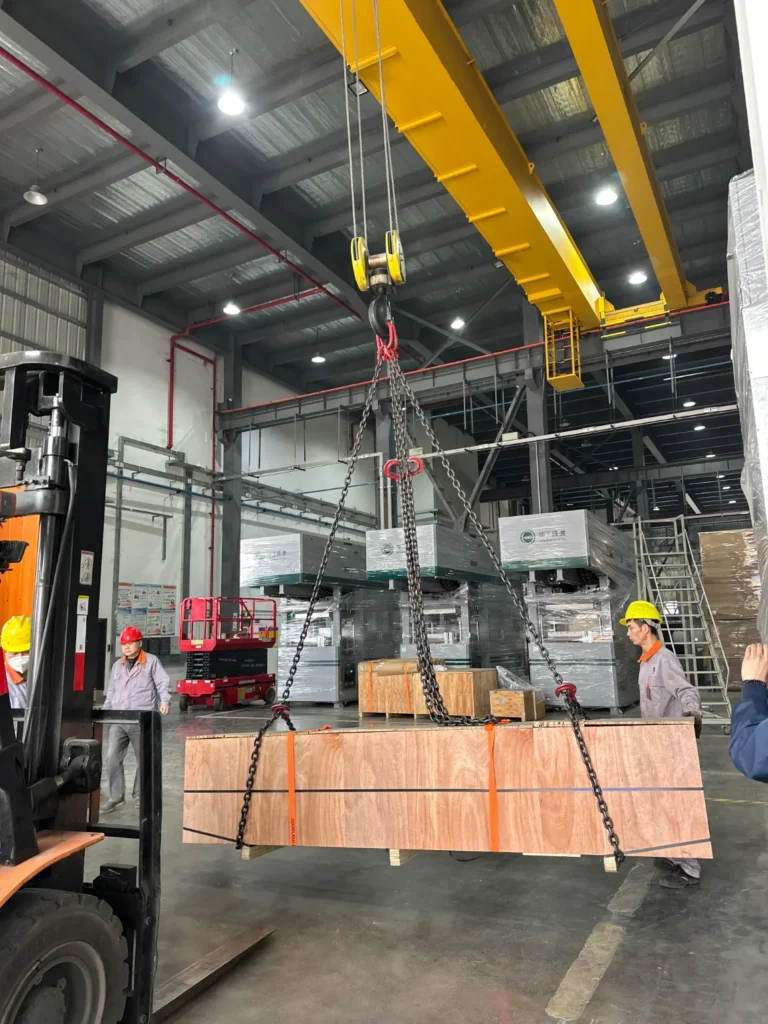
- reviewing lifting, unloading, and installation access before mechanical assembly begins;
- arranging operator and maintenance participation during installation and commissioning.
From Fiber to Finished Pulp Tableware
Pulp tableware manufacturing is a connected process. HGHY’s pulp-molding systems are designed around the main stages needed to transform fiber materials into formed products for food-service applications.
| Production stage | Purpose in the manufacturing process |
|---|---|
| Pulp preparation | Fiber material is mixed with water and prepared to achieve a consistent slurry for forming. |
| Forming | The prepared pulp is shaped through the production mold to create the required tableware geometry. |
| Drying and hot pressing | Moisture is removed and the product is stabilized to support strength, shape, and surface quality. |
| Trimming and finishing | Edges and details are finished according to the required product specification. |
| Inspection and packing | Finished pieces are checked, counted, and prepared for storage or delivery. |
The details of the operating parameters will depend on the product design, fiber characteristics, mold configuration, and factory utilities. During commissioning, these conditions should be documented carefully so the Vietnamese client can establish repeatable procedures for normal production.
What Happens After Delivery
The equipment arrival is followed by several coordinated steps. Each one matters to the long-term performance of the line.
1. Installation and Mechanical Alignment
The first task is to position, assemble, and align the equipment according to the final layout. Proper alignment supports reliable movement, safe operation, and convenient maintenance access. The installation phase should also confirm that service areas remain accessible for routine inspection, cleaning, and replacement of wear parts.
2. Utility Connection and System Checks
Pulp tableware manufacturing relies on stable utilities. Before production trials, the project team should check the adequacy and consistency of power, water, compressed air, drainage, ventilation, and the selected heat source. Each connection should be verified against the equipment requirements and the factory’s actual operating conditions.
3. Commissioning with the Intended Raw Material
Commissioning should use the fiber material planned for regular operation whenever possible. This is the practical way to understand pulp consistency, forming behavior, drainage, drying performance, product strength, appearance, and reject control under real factory conditions.
A successful commissioning plan is not limited to starting the equipment. It should define the target product, operating sequence, quality checks, accepted output, and the actions required if results do not meet the agreed specification.
4. Operator and Maintenance Training
Stable daily production depends on the people who run and maintain the line. Training should cover start-up and shutdown procedures, pulp preparation, cleaning, mold care, basic parameter adjustment, quality inspection, preventive maintenance, and safe response to common operating issues.
This stage also creates a foundation for long-term continuity: operators learn how to identify abnormal conditions early, while maintenance personnel learn which checks help prevent avoidable downtime.
Why Project Coordination Matters in Vietnam
For an overseas equipment project, successful delivery depends on the coordination between the equipment supplier, the client’s site team, and local installation resources. Clear responsibilities are essential for unloading, placement, civil work, utilities, installation, trial production, and handover.
HGHY states that it can support factory planning, customized equipment configuration, installation and troubleshooting, operator training, and ongoing technical support. For this project, the most effective next step is to convert each activity into a detailed execution schedule with defined responsible parties, site conditions, and acceptance milestones.
A practical responsibility matrix should identify:
- who confirms the final layout and foundation readiness;
- who provides and verifies each utility connection;
- who manages installation safety and lifting arrangements;
- who participates in commissioning and product-quality approval;
- who receives operating documentation and maintenance records;
- how technical questions and spare-parts needs will be handled after handover.
Building a Stable Start for Pulp Tableware Production
The first production period is the time to establish good operating discipline. The client should record pulp recipes, moisture-control settings, press parameters, product weights, appearance standards, and maintenance observations. These records help the plant move from an initial start-up phase toward controlled, repeatable output.
The project should focus on usable finished products rather than only machine speed. A stable line is measured by the consistency of its molded pulp tableware, the efficiency of material and energy use, the clarity of its operating routines, and the team’s ability to maintain performance day after day.
With the equipment now received, the Vietnamese client can move forward with installation and commissioning preparation. HGHY’s role is to support that journey with a complete process perspective—from equipment setup and operator training to the technical work required for reliable pulp tableware manufacturing.
FAQ
What does equipment delivery mean for a pulp tableware project?
It means the project can begin site installation, utility connection, equipment alignment, commissioning preparation, and operator training. Delivery is the start of the on-site implementation phase rather than the final stage of the project.
What should be prepared before HGHY equipment installation?
The site should confirm layout space, foundations, lifting access, power, water, compressed air, drainage, ventilation, heat source arrangements, raw-material flow, and safety procedures. The exact requirements should follow the approved HGHY project documentation.
Why should commissioning use the intended fiber material?
Using the planned production material allows the team to assess actual pulping, forming, drying, surface quality, strength, and reject-control conditions. This supports realistic operating parameters for future production.
How can the client support reliable daily operation?
The client should maintain disciplined procedures for pulp preparation, mold care, cleaning, quality checks, preventive maintenance, and recordkeeping. Operator and maintenance training should be completed before routine output is expected.
Does HGHY provide support after equipment delivery?
HGHY states that its support scope includes factory planning, installation and troubleshooting assistance, training, and ongoing technical support. The detailed support plan for a project should be agreed in the project schedule and commercial documentation.
 English
 Thai
 Russian
 Vietnamese