
Opportunities in the Green Packaging Sector Driven by Policy Transition
The molded pulp tableware market in Algeria is entering a phase of accelerated demand growth. Driven simultaneously by the transition of national environmental policy, the upgrading of foodservice consumption patterns, shifting consumer attitudes, and an underdeveloped domestic supply chain, this market exhibits the classic characteristics of a “policy-driven emerging market.” This report examines the current market landscape across four dimensions — policy environment, end-market demand, consumer trends, and supply chain structure — and offers research conclusions on investment return logic and viable entry pathways to inform relevant investment decisions.
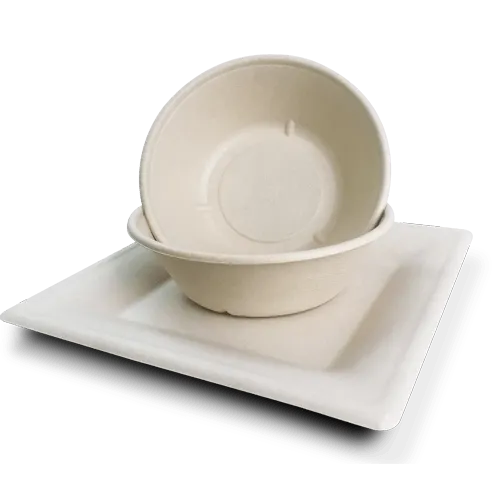
I. Market Background
As one of the core consumer markets in North Africa, Algeria has a population exceeding 46 million and continues to experience rising urbanization. Against this backdrop, national demand for green packaging and single-use biodegradable tableware is undergoing a clear structural expansion. This growth pattern differs from the gradual, incremental growth typical of mature markets; instead, it is driven by the simultaneous convergence of regulatory enforcement, market demand, and consumer awareness within the same time window — a form of “resonant” growth.

II. Analysis of Demand Drivers
2.1 Policy Direction: National Environmental Strategy and Plastic Restrictions
The Algerian government has, in recent years, continued to push for restrictions on single-use plastics while encouraging the adoption of biodegradable and recyclable packaging materials, as reflected in the following:
- National-level policy support: Algeria has formulated the National Action Plan for Sustainable Consumption and Production, explicitly designating waste management as one of the plan’s core pillars — signaling that this issue has moved from departmental initiative to a long-term direction embedded in national governance.
- Strengthening regulatory enforcement: Newly formulated environmental regulations are progressively imposing substantive restrictions on traditional plastic waste, prompting retailers and foodservice operators to accelerate their search for compliant alternatives. Molded pulp tableware made from bagasse, bamboo pulp, or wheat straw pulp — given the availability of raw materials and the maturity of production processes — has emerged as a widely recognized substitute category.
Analytical conclusion: A defining feature of policy-driven markets is the non-linear release of demand. During the transition window from “advisory” to “mandatory” regulation, market demand tends to be released in concentrated bursts, and market participants who position themselves early are more likely to secure first-mover advantages in distribution channels.
2.2 End-Market Demand: Structural Growth in the Foodservice and Agro-Food Industry
- Dual support from population base and urbanization: With a population exceeding 46 million, Algeria’s accelerating urbanization is directly driving up demand for convenience food and delivery services.
- Expanding consumption scenarios for single-use tableware: The proliferation of quick-service restaurants (QSR), food delivery, and institutional catering (schools, hospitals, airline catering) constitutes the primary consumption scenario for single-use containers, plates, bowls, and cups, representing a large and sustained demand base.
- Proactive substitution driven by brand upgrading: To appeal to consumer segments more attentive to brand image, an increasing number of foodservice operators are proactively phasing out plastic packaging in favor of molded pulp packaging with better texture and superior oil- and heat-resistance. This behavior goes beyond passive regulatory compliance and reflects a proactive brand value upgrade — a form of demand with significantly greater stickiness than demand driven purely by regulatory necessity.
2.3 Consumer Awareness: Growing Penetration of Sustainability Concepts
Influenced by both global environmental trends and local environmental education, Algerian consumers — particularly younger demographics and the middle class — are increasingly factoring “environmental friendliness and health” into their purchasing decisions. Key shifts in awareness include:
- Rising consumer awareness of the potential health risks associated with traditional plastic tableware releasing harmful substances when in contact with hot food;
- Deepening awareness of the environmental impact of the non-biodegradability of plastic products;
- Correspondingly higher consumer acceptance of non-toxic, harmless, and 100% compostable molded pulp tableware.
This dimension forms the long-term underlying support for market demand. Its growth curve is relatively steadier than that driven by policy, but exhibits stronger persistence.
2.4 Supply Chain Structure: The Shift from “Product Imports” to “Equipment Imports”
Algeria’s domestic paper and molded pulp industry chain remains in an early stage of development, and the majority of high-quality pulp tableware currently sold in the market is imported. This structural gap is giving rise to a subsegment with even greater growth potential: the import of molded pulp production equipment.
Key observations are summarized below:
| Dimension | Observation |
|---|---|
| Regional market trend | The molded pulp machinery market across the Middle East and Africa (MEA) region continues to grow steadily amid favorable policy conditions |
| Local investment activity | Algerian domestic investors are actively procuring production equipment in pursuit of localized manufacturing capacity |
| Primary equipment types | Automatic rotary molding machines (suited to large-scale standardized production); reciprocating molding machines (suited to customized production by small and medium-sized enterprises) |
| Investment rationale | Leveraging local agricultural waste fiber or recycled pulp resources to achieve import substitution, reduce production costs, and supply substantial domestic demand |
Analytical conclusion: A clear gap exists between end-market consumer demand and domestic production capacity. This gap represents an as-yet unfilled import-substitution opportunity, and the early-stage investment return profile of such opportunities typically outperforms that of consumer product markets that have already reached a state of full competition.
III. Analysis of Investment Return Logic
Based on the demand-side and supply-side analysis above, this report identifies three structural layers through which investment returns in this market can be understood:
3.1 First-Mover Premium During the Policy Dividend Window
The transition of environmental regulation from “advisory” to “mandatory” typically involves a defined time window. Market participants who complete capacity build-out or channel development during this window can secure customer resources at relatively lower competitive cost. Once regulation is fully enforced, the cost of acquiring channels and customers for later entrants will rise significantly.
3.2 Cost Structure Advantage from Import Substitution
Once localized production is achieved, the cost of local raw materials — such as agricultural waste fiber or recycled pulp — is significantly lower than that of imported materials. This, combined with the avoidance of import tariffs and logistics costs, results in a gross margin profile superior to that of a pure import-trading model.
3.3 Compound Return Potential in the Equipment Import Segment
Whether entering the market through equipment trading, technology transfer, or self-built production capacity, the molded pulp machinery subsegment currently has a relatively limited number of competing participants, and customer bargaining power has not yet been fully compressed. Entry at this stage typically yields higher returns per unit of investment.
3.4 Risk Considerations
It should be noted that investment in any emerging market carries inherent uncertainty. The following variables warrant particular attention in the evaluation process:
- Exchange rate fluctuation risk;
- The possibility that the pace of regulatory implementation may deviate from expectations;
- The level of development of local infrastructure and supporting industry chains;
- The stability and consistency of raw material supply.
Investment decisions should not be based solely on the demand growth curve, and should be made in conjunction with a comprehensive assessment of the risk variables outlined above.
IV. Recommended Market Entry Pathways
Based on the current market structure, this report proposes three viable market entry pathways for investors with differing risk appetites and resource endowments:
Pathway One: Equipment Trading and Technology Transfer Supplying Algerian domestic investors with mature automatic rotary or reciprocating molding machines, supported by a technical training and after-sales service system. This pathway carries relatively low investment barriers and a shorter payback cycle, making it suitable as a first-stage market entry point.
Pathway Two: Joint Ventures Anchored to Local Resource Partners Establishing joint ventures with partners familiar with the local agricultural waste supply chain provides both access to low-cost raw materials and local channel resources, enabling faster reach into institutional catering customer segments. This pathway requires heavier upfront investment but offers a deeper competitive moat, making it suitable for medium- to long-term strategic positioning.
Pathway Three: Focus on Premium Customer Segments Prioritizing entry into mid-to-high-end foodservice and quick-service restaurant chains that place strong emphasis on brand image. This customer segment is relatively less price-sensitive and more willing to pay a premium for superior texture and better oil- and heat-resistance, typically resulting in stronger early-stage profit margins compared to volume-driven institutional catering channels.
V. Conclusion
Taking into account the four dimensions of policy environment, end-market demand, consumer awareness, and supply chain structure, Algeria’s molded pulp tableware market is entering an accelerated growth phase driven by the convergence of multiple factors. Demand certainty in the end-consumer product market is relatively high, while the equipment import and import-substitution segment — arising from insufficient domestic production capacity — holds greater potential for early-stage investment returns.
It is recommended that investors prioritize entry through equipment imports or small-scale joint venture pilots, using a lower-cost trial-and-error approach to validate local channel fit and the pace of regulatory implementation before evaluating whether to scale investment further. Given that policy dividend windows are typically time-limited, relevant decision-makers are advised to initiate due diligence and market access assessments at an early stage.
 English
  Thai
Thai  Russian
  Vietnamese